CD152 (CTLA-4) Monoclonal Antibody (14D3), PE, eBioscience
PRODUCT DETAILS
Host: Mouse
Isotype: IgG2a, kappa
Clonality: Monoclonal
Clone: 14D3
Format: PE
Reactivity: Hu, Rh
Application: Flow Cytometry
Tested Dilution: 5 µL (0.03 µg)/test
Concentration: 5 μL/Test
Storage: 4°C, store in dark, DO NOT FREEZE!
Formulation: PBS with BSA and 0.09% sodium azide; pH 7.2
Purification: Affinity chromatography
Data Sheet: TDS
Specific Information
Description: The 14D3 monoclonal antibody reacts with human CD152, also known as cytotoxic T lymphocyte antigen-4 (CTLA-4). CTLA-4, a protein with structural similarities to CD28, is expressed on activated T cells (activated B cells may also express CTLA-4) and binds the B7 family members, CD80 (B7-1) and CD86 (B7-2), with higher affinity than CD28 does. CTLA-4 and CD28 appear to deliver opposing signals to T cells: while CD28 is a potent costimulator, CTLA-4 restricts the progression of T cells to an activated state by inhibiting IL-2 secretion and cellular proliferation. The cytoplasmic portion of CTLA-4 contains ER retention motifs, resulting in intracellular localization of a large proportion of newly synthesized CTLA-4 in response to TCR signaling.
The 14D3 antibody also recognizes rhesus monkey and has inhibitor activity.
Applications Reported: The 14D3 antibody has been reported for use in flow cytometric analysis.
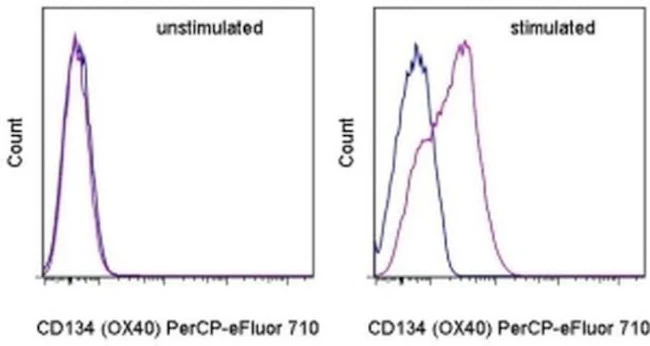
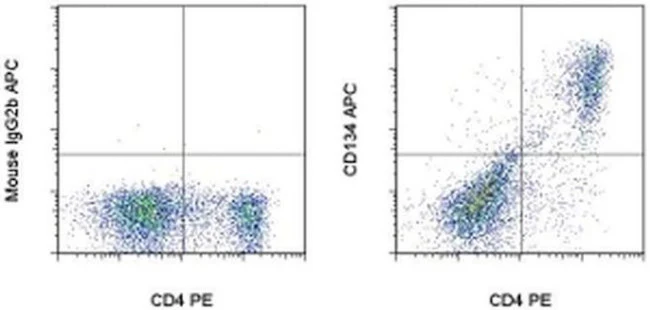
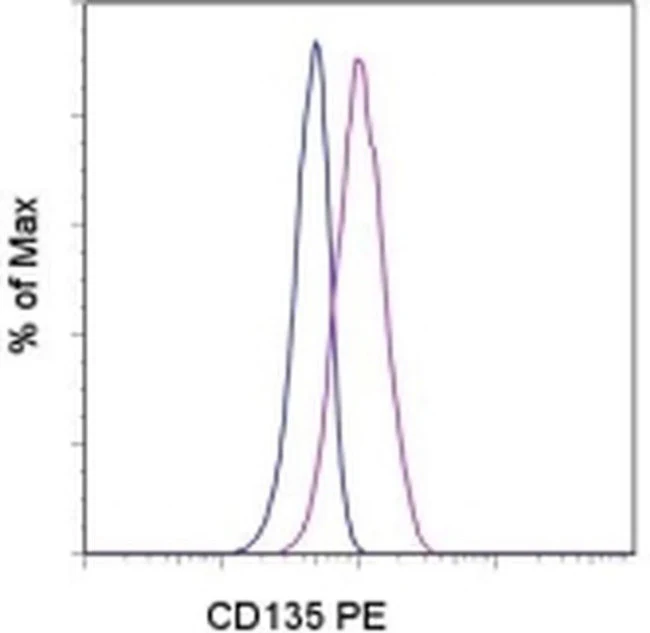
Applications Tested: This 14D3 antibody has been pre-titrated and tested by intracellular staining and flow cytometric analysis of stimulated human peripheral blood cells using the Intracellular Fixation & Permeabilization Buffer Set (Product # 88-8824-00) and protocol. Please refer to BestProtocols®: Protocol A: Two step protocol for (cytoplasmic) intracellular proteins located under the Resources Tab online. This can be used at 5 µL (0.03 µg) per test. A test is defined as the amount (µg) of antibody that will stain a cell sample in a final volume of 100 µL. Cell number should be determined empirically but can range from 10^5 to 10^8 cells/test.
Furthermore, due to the intracellular localization of a large portion of CTLA-4, for complete detection it may be necessary to assess intracellular expression, in addition to surface expression of CTLA-4.
Excitation: 488-561 nm; Emission: 578 nm; Laser: Blue Laser, Green Laser, Yellow-Green Laser.
Filtration: 0.2 µm post-manufacturing filtered.
For Research Use Only. Not for use in diagnostic procedures. Not for resale without express authorization.
Product Information
Product Information
Shipping & Returns
Shipping & Returns

CD152 (CTLA-4) Monoclonal Antibody (14D3), PE, eBioscience
CD152 (CTLA-4) Monoclonal Antibody (14D3), PE, eBioscience
PRODUCT DETAILS
Host: Mouse
Isotype: IgG2a, kappa
Clonality: Monoclonal
Clone: 14D3
Format: PE
Reactivity: Hu, Rh
Application: Flow Cytometry
Tested Dilution: 5 µL (0.03 µg)/test
Concentration: 5 μL/Test
Storage: 4°C, store in dark, DO NOT FREEZE!
Formulation: PBS with BSA and 0.09% sodium azide; pH 7.2
Purification: Affinity chromatography
Data Sheet: TDS
Specific Information
Description: The 14D3 monoclonal antibody reacts with human CD152, also known as cytotoxic T lymphocyte antigen-4 (CTLA-4). CTLA-4, a protein with structural similarities to CD28, is expressed on activated T cells (activated B cells may also express CTLA-4) and binds the B7 family members, CD80 (B7-1) and CD86 (B7-2), with higher affinity than CD28 does. CTLA-4 and CD28 appear to deliver opposing signals to T cells: while CD28 is a potent costimulator, CTLA-4 restricts the progression of T cells to an activated state by inhibiting IL-2 secretion and cellular proliferation. The cytoplasmic portion of CTLA-4 contains ER retention motifs, resulting in intracellular localization of a large proportion of newly synthesized CTLA-4 in response to TCR signaling.
The 14D3 antibody also recognizes rhesus monkey and has inhibitor activity.
Applications Reported: The 14D3 antibody has been reported for use in flow cytometric analysis.
Applications Tested: This 14D3 antibody has been pre-titrated and tested by intracellular staining and flow cytometric analysis of stimulated human peripheral blood cells using the Intracellular Fixation & Permeabilization Buffer Set (Product # 88-8824-00) and protocol. Please refer to BestProtocols®: Protocol A: Two step protocol for (cytoplasmic) intracellular proteins located under the Resources Tab online. This can be used at 5 µL (0.03 µg) per test. A test is defined as the amount (µg) of antibody that will stain a cell sample in a final volume of 100 µL. Cell number should be determined empirically but can range from 10^5 to 10^8 cells/test.
Furthermore, due to the intracellular localization of a large portion of CTLA-4, for complete detection it may be necessary to assess intracellular expression, in addition to surface expression of CTLA-4.
Excitation: 488-561 nm; Emission: 578 nm; Laser: Blue Laser, Green Laser, Yellow-Green Laser.
Filtration: 0.2 µm post-manufacturing filtered.
For Research Use Only. Not for use in diagnostic procedures. Not for resale without express authorization.
Original: $357.00
-70%$357.00
$107.10Product Information
Product Information
Shipping & Returns
Shipping & Returns
Description
PRODUCT DETAILS
Host: Mouse
Isotype: IgG2a, kappa
Clonality: Monoclonal
Clone: 14D3
Format: PE
Reactivity: Hu, Rh
Application: Flow Cytometry
Tested Dilution: 5 µL (0.03 µg)/test
Concentration: 5 μL/Test
Storage: 4°C, store in dark, DO NOT FREEZE!
Formulation: PBS with BSA and 0.09% sodium azide; pH 7.2
Purification: Affinity chromatography
Data Sheet: TDS
Specific Information
Description: The 14D3 monoclonal antibody reacts with human CD152, also known as cytotoxic T lymphocyte antigen-4 (CTLA-4). CTLA-4, a protein with structural similarities to CD28, is expressed on activated T cells (activated B cells may also express CTLA-4) and binds the B7 family members, CD80 (B7-1) and CD86 (B7-2), with higher affinity than CD28 does. CTLA-4 and CD28 appear to deliver opposing signals to T cells: while CD28 is a potent costimulator, CTLA-4 restricts the progression of T cells to an activated state by inhibiting IL-2 secretion and cellular proliferation. The cytoplasmic portion of CTLA-4 contains ER retention motifs, resulting in intracellular localization of a large proportion of newly synthesized CTLA-4 in response to TCR signaling.
The 14D3 antibody also recognizes rhesus monkey and has inhibitor activity.
Applications Reported: The 14D3 antibody has been reported for use in flow cytometric analysis.
Applications Tested: This 14D3 antibody has been pre-titrated and tested by intracellular staining and flow cytometric analysis of stimulated human peripheral blood cells using the Intracellular Fixation & Permeabilization Buffer Set (Product # 88-8824-00) and protocol. Please refer to BestProtocols®: Protocol A: Two step protocol for (cytoplasmic) intracellular proteins located under the Resources Tab online. This can be used at 5 µL (0.03 µg) per test. A test is defined as the amount (µg) of antibody that will stain a cell sample in a final volume of 100 µL. Cell number should be determined empirically but can range from 10^5 to 10^8 cells/test.
Furthermore, due to the intracellular localization of a large portion of CTLA-4, for complete detection it may be necessary to assess intracellular expression, in addition to surface expression of CTLA-4.
Excitation: 488-561 nm; Emission: 578 nm; Laser: Blue Laser, Green Laser, Yellow-Green Laser.
Filtration: 0.2 µm post-manufacturing filtered.
For Research Use Only. Not for use in diagnostic procedures. Not for resale without express authorization.